
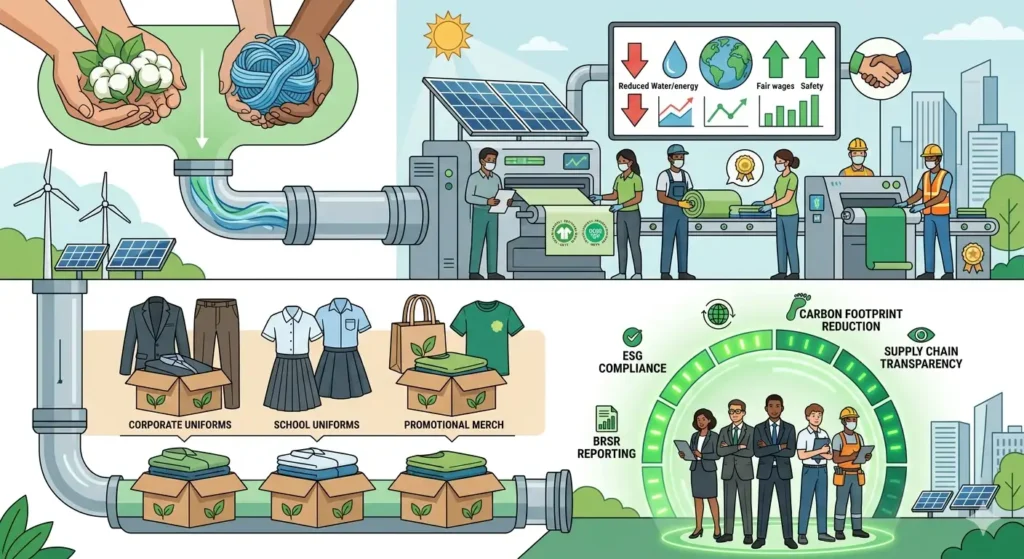
The fashion industry contributes close to 10% of global carbon emissions, while nearly 85% of textiles end up in landfills each year.
Behind these numbers lies a deeper issue, Scope 3 emissions, which originate across the supply chain and often make up the largest share of a brand’s environmental impact.
From raw material extraction to final delivery, every stage adds to the footprint.
This shift in awareness is driving demand for sustainable clothing and eco-friendly apparel, where businesses are expected to go beyond surface-level claims and demonstrate measurable impact.
Among the brands addressing this challenge with a structured approach is Scope3, helping organizations align apparel sourcing with real sustainability goals.
In this piece, you will understand how sustainable fashion brands are transforming ethical manufacturing and how your business can adopt smarter, low-impact apparel solutions.
The Shift Towards Ethical Manufacturing
Sustainability in fashion today is about accountability. Companies are being evaluated not just on design or pricing, but on how responsibly their products are made.
This includes
- Reduced carbon emissions across supply chains
- Ethical labor practices and fair wages
- Responsible water and energy usage
- Waste reduction and circular production
Sustainable fashion brands are building systems that integrate these elements into every stage of production, ensuring that impact is minimized without compromising on quality.
Tackling Scope 3 Emissions in Apparel
A large portion of environmental impact in fashion comes from activities outside direct operations, fabric production, dyeing, transportation, and even product usage. These are categorized as Scope 3 emissions.
For businesses, this creates a challenge. While these emissions are harder to control, they are critical to address. Choosing the right apparel partner plays a key role here.
Scope3 approaches this challenge by focusing on
- Sustainable raw materials like organic cotton and recycled fibers
- Low-impact dyeing processes that reduce energy consumption
- Supply chain transparency for better accountability
- Durable garment construction to extend product lifecycle
This makes it easier for organizations to reduce their indirect emissions while maintaining consistent quality in their apparel needs.
Measurable Impact That Drives Real Change
Sustainability becomes meaningful when it is backed by data. Ethical manufacturing practices can deliver measurable environmental and social benefits
- 20% lower energy use through low-impact dyeing processes
- 50–70% reduction in chemical runoff with organic and AZO-free dyes
- 30% improvement in land use efficiency through organic farming
- Up to 70% lower health risks for workers due to non-toxic materials
- 30–40% reduction in textile waste using biodegradable fabrics
These insights highlight how eco-friendly apparel goes beyond branding; it directly contributes to environmental preservation and safer working conditions.
How Sustainable Clothing Impacts Business Growth
Sustainability is influencing purchasing decisions across industries. Whether it is corporate uniforms, educational institution apparel, or promotional merchandise, businesses are prioritizing responsible sourcing.
Adopting sustainable clothing offers several advantages
- Strengthens brand credibility and trust
- Aligns with ESG (Environmental, Social, Governance) goals
- Meets growing regulatory expectations
- Appeals to environmentally conscious customers and stakeholders
Organizations that integrate sustainability into procurement decisions are better positioned to build long-term value.
Why Scope3 Stands Out in Ethical Manufacturing
What sets Scope3 apart is its structured, end-to-end approach. Instead of focusing on isolated improvements, the brand works across the entire value chain.
Key Focus Areas
- Eco-Friendly Fabrics: Use of organic cotton, recycled polyester, and responsibly sourced materials
- Low-Waste Production: Optimized manufacturing processes that reduce fabric waste and resource use
- Sustainable Packaging: Biodegradable and recyclable packaging solutions for bulk orders
- Durability and Longevity: High-quality construction that reduces the need for frequent replacements
This integrated model ensures that sustainability is not treated as an add-on but as a core operational principle.
If your organization is looking to reduce environmental impact while maintaining quality and consistency in apparel, this is the right time to act.
Expanding Sustainability Across Industries
Sustainable fashion is not limited to retail. It is influencing multiple sectors
Corporates
Businesses are shifting to eco-friendly apparel for corporate wear uniforms, reducing their Scope 3 emissions while strengthening ESG commitments.
Educational Institutions
Schools and universities are adopting sustainable uniforms, encouraging environmentally responsible habits from an early stage.
Accessories & Corporate Gifting
Organizations are choosing eco-conscious promotional products to extend sustainability beyond operations.
This broader adoption reflects how sustainable fashion brands are shaping industry-wide transformation.
Environmental Impact at Scale
When sustainability is implemented at scale, the impact becomes significant
- Up to 91% water savings with organic cotton production
- 1.2–1.6 kg CO₂ reduction per kg of fabric
- 1,350 liters of water saved per T-shirt
- 40–50% reduction in textile waste annually
- 50–60% lower carbon footprint per garment
These numbers demonstrate how switching to eco-friendly apparel contributes to both environmental conservation and operational efficiency.
Building a Future with Responsible Fashion
Ethical manufacturing is building the future of the apparel industry. Businesses are expected to move towards transparency, accountability, and measurable sustainability outcomes.
By choosing partners that prioritize these values, organizations can
- Reduce environmental impact across supply chains
- Improve operational efficiency
- Strengthen brand positioning in competitive markets
Scope3 plays a defining role in this shift by delivering scalable, sustainable clothing solutions designed for evolving business needs.
Sustainability now builds brand perception, strengthens partnerships, and drives long-term, responsible growth.
FAQs
What is sustainable fashion?
Sustainable fashion refers to clothing that is designed, produced, and distributed in ways that reduce environmental impact and support ethical labor practices.
Why is eco-friendly apparel important?
Eco-friendly apparel helps reduce pollution, conserve resources like water and energy, and promote safer working conditions in the fashion industry.
What are Scope 3 emissions in fashion?
Scope 3 emissions are indirect emissions that occur across the supply chain, including raw material sourcing, manufacturing, transportation, and product disposal.
How can businesses switch to sustainable clothing?
Businesses can choose suppliers that use organic materials, ethical production methods, and low-impact processes to reduce their overall environmental footprint.
Does sustainable clothing cost more?
While the initial cost can be slightly higher, sustainable clothing often lasts longer, reduces replacement needs, and adds long-term value for businesses.